
Hair Restoration Journalism
UrgentCare Hair
FUE Hair Transplant Scarring: What It Actually Looks Like
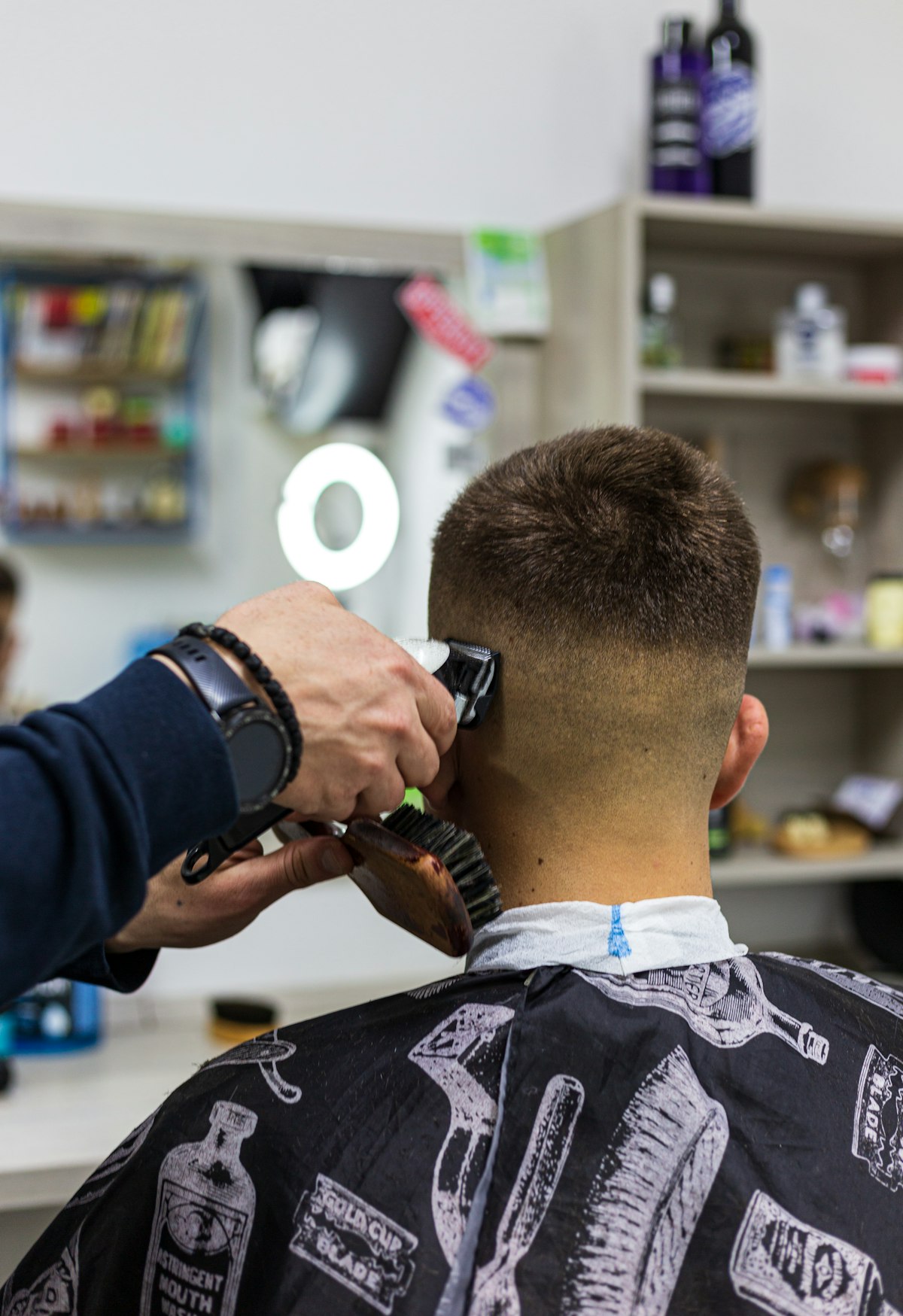
One of the biggest concerns people have about hair transplants, right up there with cost and whether it actually works, is scarring. The image that lives in most people's heads is the old strip method: a horizontal scar running across the back of the head, visible if you ever cut your hair short. It's a legitimate concern, and a decade ago it was a real trade-off you had to accept. But FUE has fundamentally changed the scarring picture, and the reality in 2026 is far better than most people expect.
The Old Way vs the New Way
To understand why FUE scarring is so different, it helps to know what came before it. FUT (Follicular Unit Transplantation), also called the strip method, involved removing a strip of skin from the back of the head, typically 20 to 25 centimetres long and about 1 centimetre wide. The wound was stitched closed, and the strip was dissected into individual grafts under a microscope.
The procedure worked well. The grafts were healthy, the results were good. But the trade-off was a linear scar that, while it could be hidden under longer hair, became visible if the patient ever wanted a short back and sides, a buzz cut, or a fade. For some men, that limitation was a dealbreaker.
FUE takes a completely different approach. Instead of removing a strip, individual follicular units are extracted one at a time using a micro-punch tool less than a millimetre in diameter. Each extraction leaves a tiny circular mark rather than a long incision. There's no stitching, no strip removal, and no linear scar.
What the Marks Actually Look Like
In the days immediately after an FUE procedure, the donor area at the back of the head has thousands of tiny dots where extractions were made. They're visible, but they look more like very close-shaved stubble with minor redness than anything dramatic. Most people describe the appearance as similar to how the area would look after a very close buzz cut.
Within the first week, the dots begin to heal. Tiny scabs form and fall away naturally during gentle washing. The redness fades.
By two weeks, the extraction sites are largely healed. If the surrounding hair is kept at a centimetre or so in length, the marks are essentially invisible. Even at very short lengths, they're difficult to spot without actively looking for them.
By one month, a barber would have to know exactly what they were looking for to identify the extraction sites. To a casual observer, the donor area looks completely normal. The tiny circular marks have healed to the point where they blend seamlessly with the surrounding skin.
At three to six months, the marks are virtually undetectable even at very short hair lengths. The skin has fully healed, and the surrounding hair in the donor area (which was never removed, just had selective follicles extracted from between the remaining ones) provides natural coverage.
The Buzz Cut Question
This is the question everyone really wants answered: can you wear your hair short after an FUE transplant? The answer is yes, with a practical caveat.
At a grade 2 or above (roughly 6mm), extraction marks are essentially invisible on most patients. The donor area looks entirely natural, and there's no pattern of scarring that gives away the procedure.
At a grade 1 (3mm), marks may be very faintly visible in certain lighting, depending on skin tone and hair colour. Lighter skin with darker hair shows the least, while very pale skin or very dark skin can occasionally show faint dots. But even at this length, the marks are subtle enough that only someone who knew to look for them would notice.
At a grade 0 or shaved to the skin, the tiny circular scars become more apparent. If your long-term plan is to wear your hair completely shaved, it's worth discussing this with your surgeon during the consultation. The marks are still far less noticeable than a FUT scar, but they are visible at zero length.
For the vast majority of patients, who wear their hair at a centimetre or longer, FUE scarring is a non-issue. You can go to any barber, ask for any style, and the donor area won't reveal a thing.
Why Some People Scar Differently
Like everything about the human body, healing is individual. Most patients heal so well that their extraction sites become virtually invisible, but some factors can influence the outcome.
Skin type plays a role. People who naturally form keloid or hypertrophic scars (raised, thickened scarring) may experience slightly more visible marks, though this is uncommon. If you know you're prone to keloid scarring, mentioning this during your consultation allows the surgical team to adjust their technique accordingly.
The surgeon's technique matters enormously. A skilled FUE surgeon extracts grafts in a randomised pattern rather than in rows, which prevents any visible pattern forming in the donor area. They also calibrate the punch size to match the patient's follicle dimensions, using the smallest tool that effectively extracts the graft. Smaller punch, smaller mark, better healing.
Post-operative care also influences healing. Following the aftercare instructions, keeping the donor area clean, avoiding direct sun exposure during the initial healing period, and not picking at scabs, all contribute to optimal healing and minimal visible scarring.
The Emotional Side of the Scarring Concern
It's worth acknowledging something: the fear of scarring is often really a fear of evidence. A scar would be visible proof that you've had a procedure, and for many people, that feels vulnerable. There's a desire for the result to look entirely natural, with no visible trail that leads back to a clinic.
FUE, done well, delivers exactly that. The result looks natural because it is natural: real hair, growing from real follicles, in a natural pattern. And the donor area, where those follicles came from, heals to the point where it keeps the secret entirely.
That discretion is one of the most valued aspects of modern FUE transplantation. You get to choose who knows and who doesn't. The hair doesn't come with an asterisk, and neither does the back of your head.
If scarring is the concern that's been holding you back, a consultation is the fastest way to put it to rest. The team can show you what the donor area typically looks like at various stages of healing, and you can make your decision with a clear, realistic picture of what to expect.
Considering a Hair Transplant?
Natural results from just £2,500, or from £57/month with finance. Book a free consultation or call us now.